Who is behind the work
Knowledge should outlive the file
A decision, a method or a story can sit in a file while others need what people learned from it. Daniel Kvist founded Intertween to explore how that knowledge could become easier to find, understand and build on.
Knowledge grows through relationships: experiences meet, someone examines a claim and earlier work finds a new use. We are developing an open framework intended to keep sources, context and contributions traceable across systems and organisations, with control close to those responsible for the source material.
Intertween takes a sociotechnical view: technology, people and institutions need to develop together. The work needs experience from practice, research, design, technology and civil society. Its value and the proposed federation still need to be tested in real settings.
The framework has not yet been implemented in production anywhere. The next step is a bounded trial, not a claim of proven interoperability.
Read more about the purpose and the choices guiding this work in the manifesto ↗.
Team
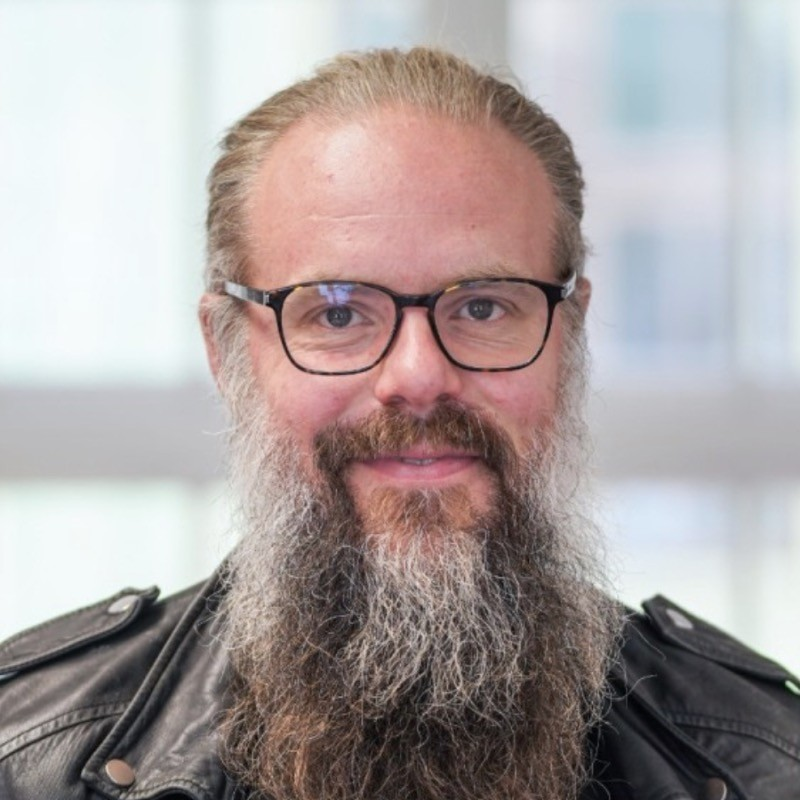
Daniel Kvist
Founder
Why Intertween?
Daniel Kvist · founder, strategist and innovation leader
I have long been fascinated by how much knowledge we create together and how little of it we manage to carry forward. We develop methods, make decisions and solve problems. Yet when a project ends, someone changes jobs or a system is replaced, we often lose the context that made the work useful.
Intertween began as an attempt to explore that problem. I want the next person to find the connections, understand what others have learned and build on it. We are therefore exploring how shared infrastructure could make knowledge useful across systems and organisations, with respect for those who create, steward and use it.
Partners, contributors and specialists
Intertween has grown through many conversations, workshops and dialogues with researchers, open-source professionals, and specialists in AI and data governance. Their questions, experience and perspectives have shaped the work. While the initiative has one founder, it draws on knowledge and ideas developed together with many others.
The local node
Knowledge does not come alive by moving a file to another location. A local node is meant to keep track of what an object rests on, which new contributions have been made and what others may see. The source and decisions about use remain with those responsible for them. When someone uses a permitted view, the resulting experience should be traceable back so contributors can be recognised.
The local metadata register describes objects, relationships and current states. The local event history, Relational Trace, records how they change. The protocol sets out how nodes can exchange permitted information under local responsibility.
Read about the architecture ↗Principles
Our five guiding principles describe how we aim to learn together, respect individuals and keep contributions, rights and responsibility visible. They are set out in the manifesto.
Our five guiding principles ↗Why Intertween?
- Intertween
- The name of the initiative and framework. It points to what we often miss between documents, people and organisational mandates.
- The protocol
- The protocol describing how nodes should exchange permitted information while retaining the source’s conditions.
- an intertween
- A Knowledge Object for a question or insight arising between other objects and mandates. It has sources and needs someone responsible for examining it.
From learning path to shared experiment
The learning paths are hypotheses based on what we have understood so far. Do you recognise a question in your work, or see something we missed? Bring a concrete case or source material. Together we can test the problem framing, shape a demo or pilot and examine what value is actually created. Purpose and scope are agreed with those involved.
Contribute
The specification is open and the conformance harness runs. Perspectives from technology, design, research and practice help us understand where the model needs to evolve. A document, guideline or observation can give us a concrete question to investigate.